9752
Flights in the air right now

Teal in the Cockpit: Ovarian Cancer Awareness for Female Pilots
Featured in the 99's Magazine: Click to View
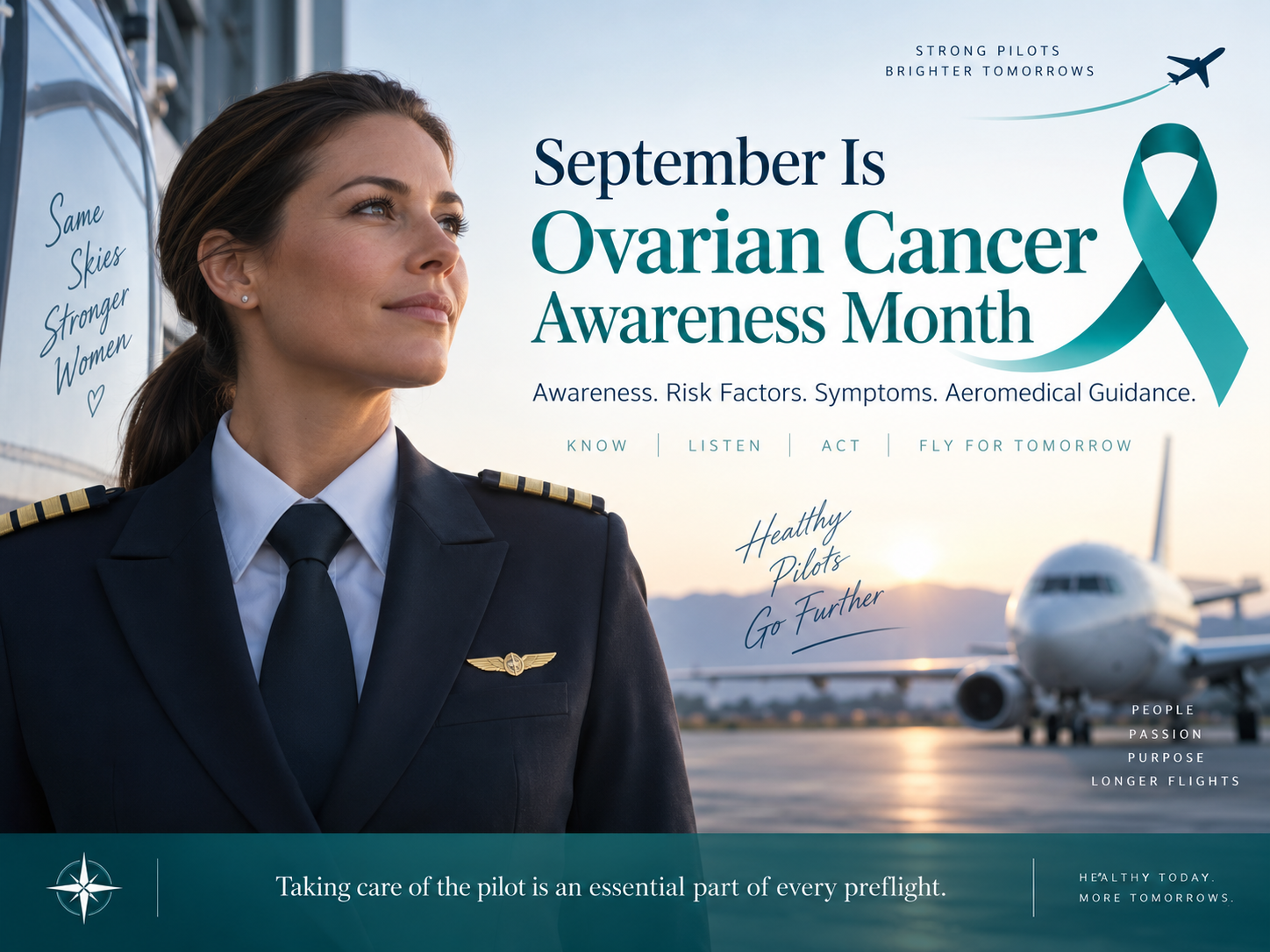
September is Ovarian Cancer Awareness Month, represented by the color teal. For female pilots, it is an important reminder to recognize persistent changes in the body and seek medical evaluation when something does not feel right.
There is currently no simple, reliable screening test for ovarian cancer in asymptomatic women at average risk. A Pap test screens for cervical cancer; it does not screen for ovarian cancer. This makes awareness of symptoms, personal risk factors, and family history especially important.
Ovarian cancer is not one single disease. It includes several tumor types that may begin in the ovaries, fallopian tubes, or nearby peritoneal tissue. The behavior, treatment, and prognosis of these cancers can vary considerably.
Possible symptoms include:
These symptoms are common and frequently have noncancerous causes. The concern arises when they are new, unexplained, persistent, progressively worsening, or different from what is normal for that individual. Women should seek medical attention when unexplained symptoms persist or become more frequent.
Pilots are trained to notice subtle changes in an aircraft’s sound, handling, and performance. We should apply that same situational awareness to our health. A symptom does not need to be dramatic to deserve attention.
When symptoms or risk factors warrant further evaluation, a clinician may recommend a pelvic examination, transvaginal ultrasound, CA-125 blood testing, or other diagnostic studies. These tests may help evaluate a concerning symptom or finding, but they are not recommended as routine ovarian cancer screening for every asymptomatic woman.
Certain inherited genetic changes, including BRCA1, BRCA2, and those associated with Lynch syndrome, can increase the risk of ovarian cancer. A personal or family history of ovarian, breast, uterine, pancreatic, prostate, or colorectal cancer may be relevant when considering genetic counseling or testing.
Genetics, however, are only one part of the risk picture. Non-genetic factors associated with an increased risk of ovarian cancer may include:
Some of these associations are modest, and researchers do not always know whether the increased risk is related to the factor itself or to an underlying medical condition.
Having one or more risk factors does not mean that a woman will develop ovarian cancer. Many women with recognized risk factors never develop the disease, and many women diagnosed with ovarian cancer have no known genetic mutation or clearly identifiable major risk factor.
Treatment is individualized and may include surgery, chemotherapy, targeted therapy, hormonal therapy, or a combination of treatments. The plan depends on the tumor type and stage, genetic findings, overall health, and response to treatment.
Ovarian cancer has touched the aviation community.
Retired U.S. Navy Captain Rosemary Bryant Mariner was one of the first women to earn her Wings of Gold and became the Navy’s first female tactical jet pilot. She later became the first woman to command an operational aviation squadron.
Captain Mariner died from ovarian cancer on January 24, 2019, at age 65, following an approximately five-year battle with the disease. Her funeral was honored with the Navy’s first all-female pilot Missing Woman Flyover.
Her life remains a powerful example of courage, leadership, and determination within aviation.
Her story is also a reminder that ovarian cancer is not merely a medical statistic. It affects aviators, families, careers, and the communities that women pilots have worked so hard to build.
A diagnosis of ovarian cancer generally requires individualized FAA review. The aeromedical concerns include the cancer itself, the extent of disease, the possibility of recurrence, and the effects of surgery, medications, and other treatment.
Active cancer or treatment may cause fatigue, anemia, pain, nausea, weakness, neuropathy, infection risk, impaired concentration, or other effects that may be incompatible with safe flight.
A pilot should work closely with her treating physician and AME before returning to aviation duties. Certification may become possible when treatment has been completed or stabilized, the pilot has recovered adequately, there are no aeromedically significant symptoms, and medications are acceptable and do not cause impairment. Every case is evaluated individually.
Pilots should be prepared to provide the FAA with comprehensive records, which may include:
The FAA’s AME Guide is updated regularly, so pilots should consult their AME before submitting an application following a new cancer diagnosis or treatment. Arriving at the examination with complete documentation may help prevent avoidable certification delays.
September offers an opportunity to wear teal, learn your family history, understand both genetic and non-genetic risk factors, recognize symptoms, and encourage other women to seek care when something has changed.
Taking care of the pilot is an essential part of every preflight.

Our mission is to support pilots and aviation professionals in maintaining their health and well-being.



Sign up for industry alerts, deals, news and insights from Aviate Medical.