
9752
Flights in the air right now

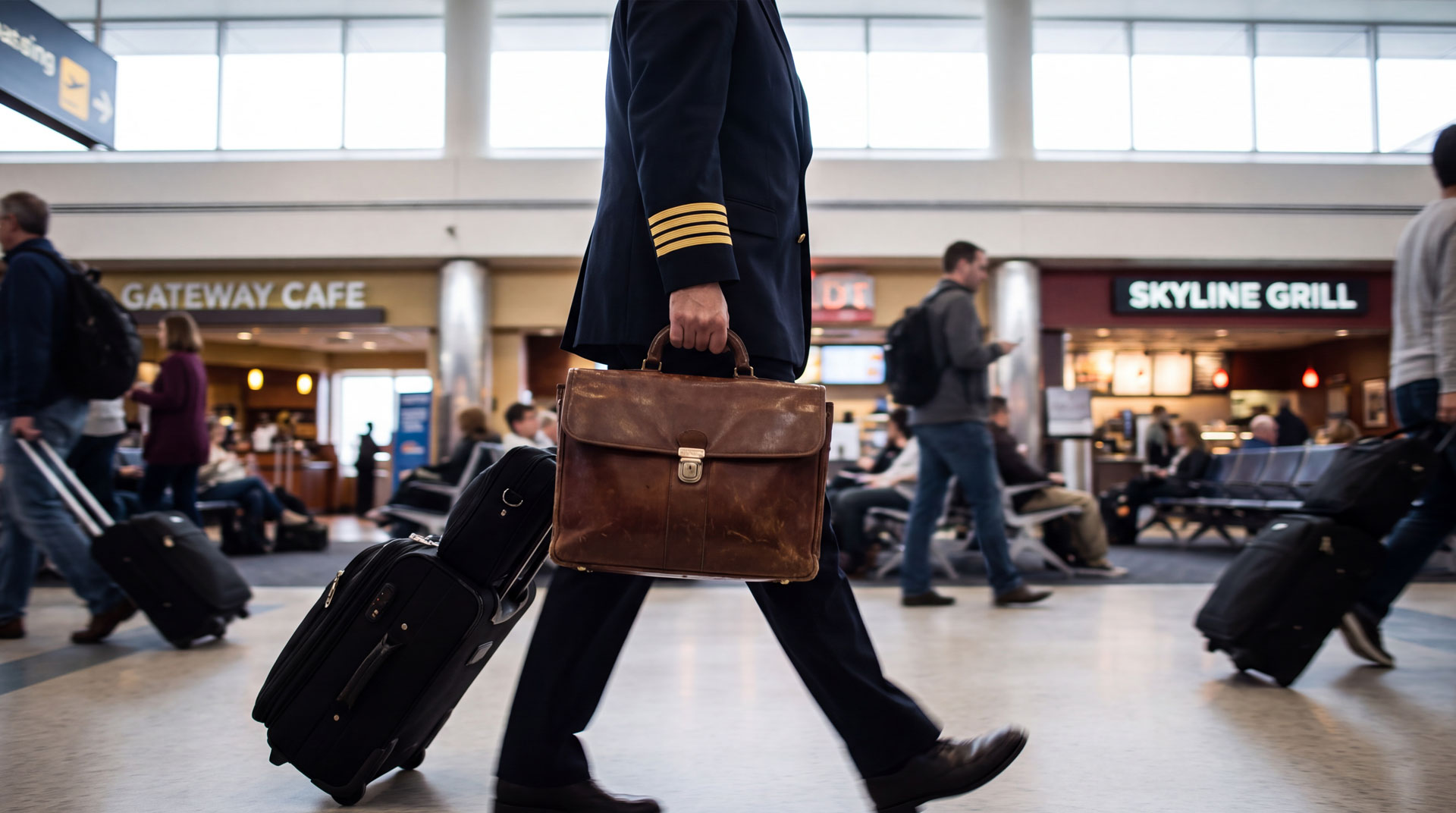
A pilot can plan a trip carefully and still arrive at the gate with ten minutes to find lunch. The morning started early, the first flight ran late, and the next chance to eat is uncertain. The choice may come down to whichever counter has the shortest line.
Eating well in aviation takes more than knowing which foods are nutritious. It takes a plan that can survive delays, short connections, unfamiliar airports, and late hotel arrivals. A
few decisions made ahead of time can give pilots more control over what they eat, even when they have little control over the schedule.
As a Senior FAA Aviation Medical Examiner and a physician board-certified in Internal Medicine and Obesity Medicine, I talk with pilots about habits that support long-term
health. Nutrition is one of them. What we eat over time can influence blood pressure, blood sugar, cardiovascular health, and metabolic health—conditions that may also affect medical certification.
No one’s health rests on a single airport meal. The choices repeated across years of flying deserve our attention.
Before a trip, consider when you are really likely to eat. A scheduled lunch break may disappear after a delay. A restaurant at your destination may close before you arrive. At a small general aviation airport, the vending machine may be your only option. Registered dietitian Whitney Sanford, RD, owner of Nutrition Upgrade, and I collaborate to help pilots find practical approaches to these challenges. Whitney puts the role of the surroundings into perspective:
“For pilots and other aviation professionals, airports and aircraft aren’t simply part of traveling—they are part of the workplace. We know that our environment has a tremendous influence on our health and everyday food choices.”
That is an important reminder. A pilot can be motivated to eat well and still have limited choices during a 20-minute connection. The solution starts with noticing where the food gaps are likely to occur. Could you eat before an early departure? Pick up a meal before boarding? Carry something for the stretch when a meal stop may not happen? Whitney’s practical advice is to avoid starting the day under-fueled, look at your options ahead of time, and always have a backup plan.
When your next opportunity to eat may be hours away, the smallest item on the menu is not necessarily the most useful choice. Look for a meal with protein, fruits or vegetables, a fiber-rich carbohydrate, and enough substance to leave you comfortably satisfied.“A balanced airport meal might be something like a grain bowl with chicken and vegetables, a salad with adequate protein and fiber-rich carbohydrate, or a breakfast sandwich with fruit,” Whitney says.
The same idea works at a grab-and-go counter. Yogurt, fruit, and nuts can make a breakfast. A turkey sandwich and vegetables can make a practical lunch. If there is no complete meal available, several complementary items can get you through until your next stop.
These are examples, not rigid rules. Think about what is available, what you enjoy, and how long the meal needs to carry you.
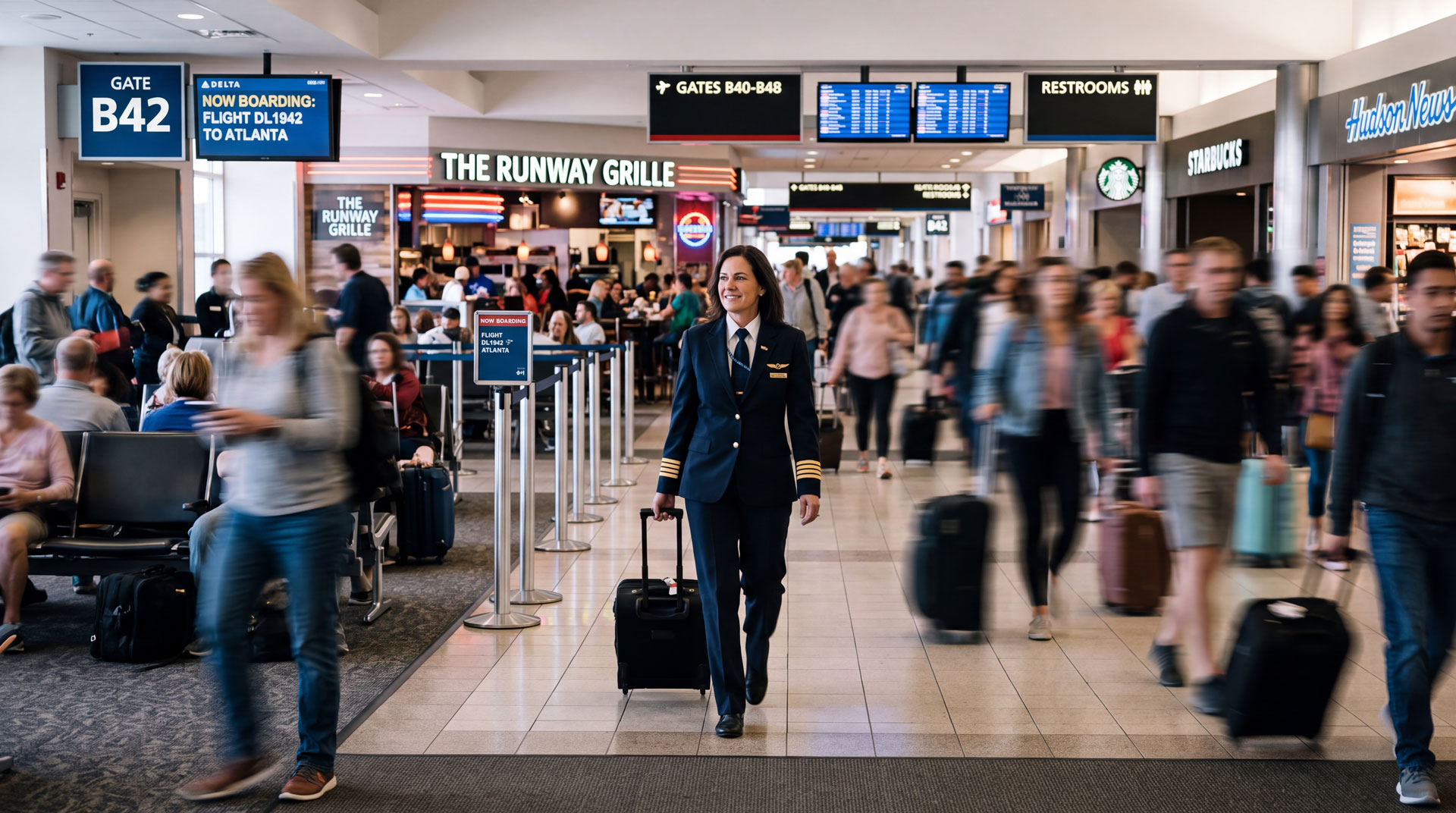
A food plan needs room for the unexpected. Whitney recommends keeping an emergency snack with protein and fiber in your flight bag. Nuts with dried fruit, roasted edamame, or a protein bar can travel well. A beef stick paired with fruit is another option when you can store it appropriately.
A backup snack does not need to replace dinner. It gives you an option when a delay turns a planned meal into several more hours of waiting. Sometimes two or three snacks can become a satisfying mini-meal. If you bring yogurt, eggs, cheese, or a prepared wrap, use an insulated bag and keep food safety in mind. And make water part of what you pack. Hydration is easy to overlook during a busy flying day, especially when getting to the next gate takes priority.
During long or hot days, some pilots find an electrolyte drink or packet helpful. Check the label: products vary in sodium, added sugar, and other ingredients. Coffee may be part of an early morning, but water deserves a place in the routine, too.
Hunger and a short connection make an unfamiliar terminal harder to navigate. Knowing where you might eat before you arrive can save time and mental effort. That idea led Whitney and me to create the Aviate Medical Healthy Eats Map. It helps pilots, crew, and other travelers find airport restaurants, cafés, and grab-and-go locations where they can assemble balanced meals. We look for realistic options with meaningful protein, produce, fiber-rich carbohydrates, and enough food for a demanding travel day.
Whitney describes its purpose this way:
The goal of the map is to reduce some of that decision fatigue by helping people identify balanced options before they even arrive at the airport.
The map is not a list of perfect meals. It is a tool for answering a useful question: Where can I find something satisfying when I get there? Check your connection before the trip and identify one or two possibilities. If the gate changes, you can adjust.

The map continues to grow. Pilots know their airports well, and we welcome suggestions for restaurants, cafés, and overlooked grab-and-go options worth adding.
The last food decision of a long duty day may be the hardest. By the time you reach the hotel, you may be tired, hungry, and unsure what is still open. When your arrival is reasonably predictable, check nearby restaurants or delivery options earlier in the day. You may even be able to schedule dinner to arrive around the time you do. If the schedule is uncertain, knowing which places serve food late can still help.
A delay or diversion may change the plan. Planning is useful because it gives you options, including a backup when the original idea no longer works.
Taking charge of your nutrition does not require packing every meal. It might mean eating before an early flight, carrying one reliable snack, checking the terminal before a connection, or deciding on dinner before you reach the hotel.
Choose one habit that fits the way you fly. Repeat it until it feels routine, then add another. A useful flight plan allows for adjustments along the way—and so does a useful plan for your health.

Our mission is to support pilots and aviation professionals in maintaining their health and well-being.


Sign up for industry alerts, deals, news and insights from Aviate Medical.


